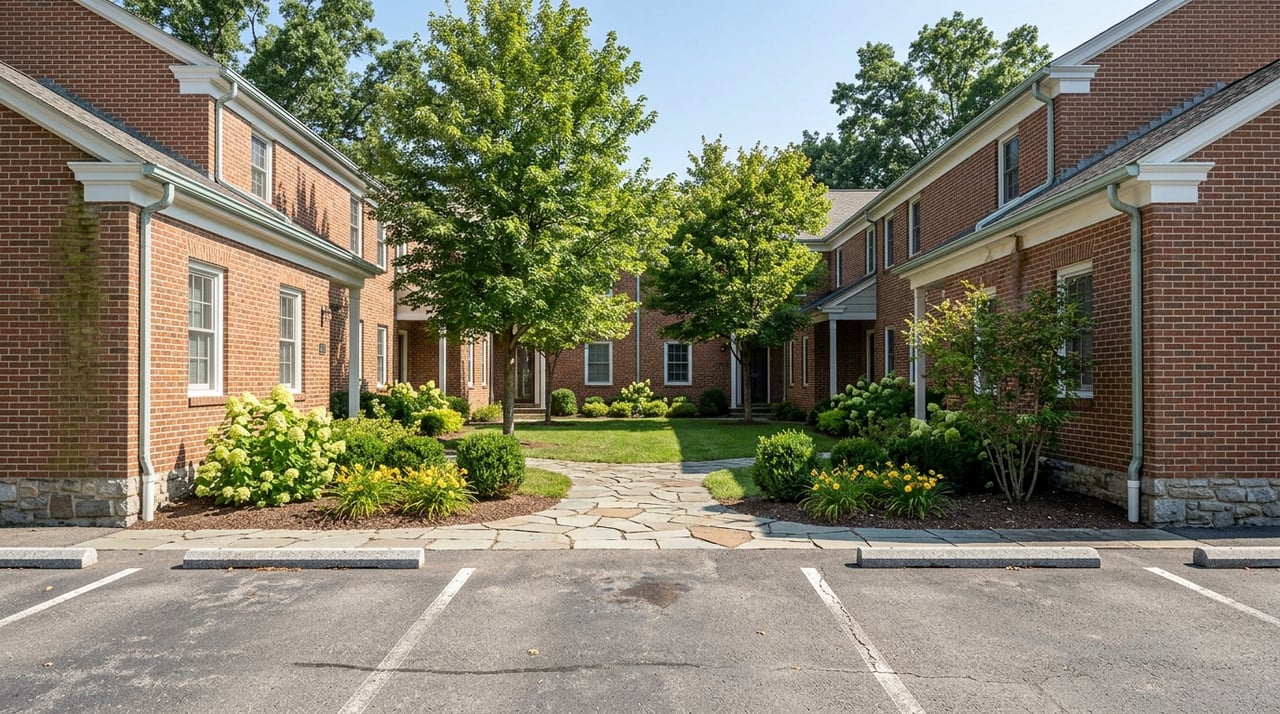
What happens to the scarcity premium on a well-kept, decades-old condo complex when the town quietly legalizes room for a thousand more units two blocks away?
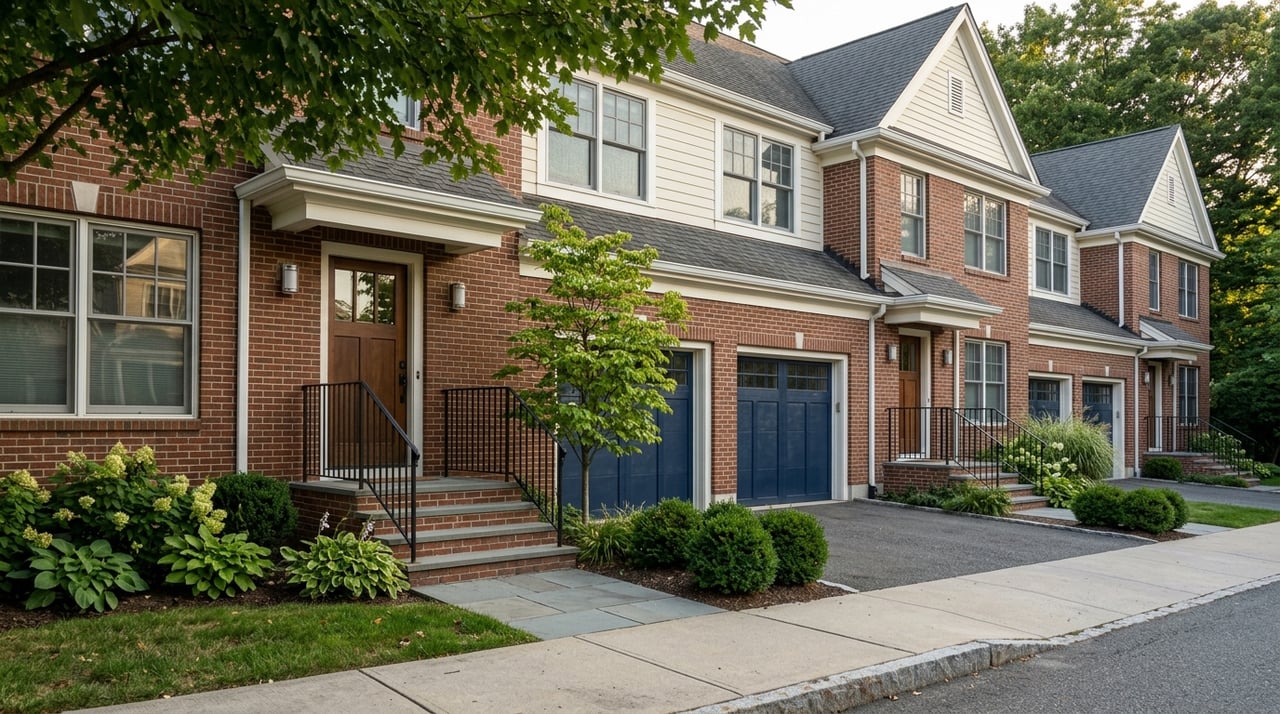
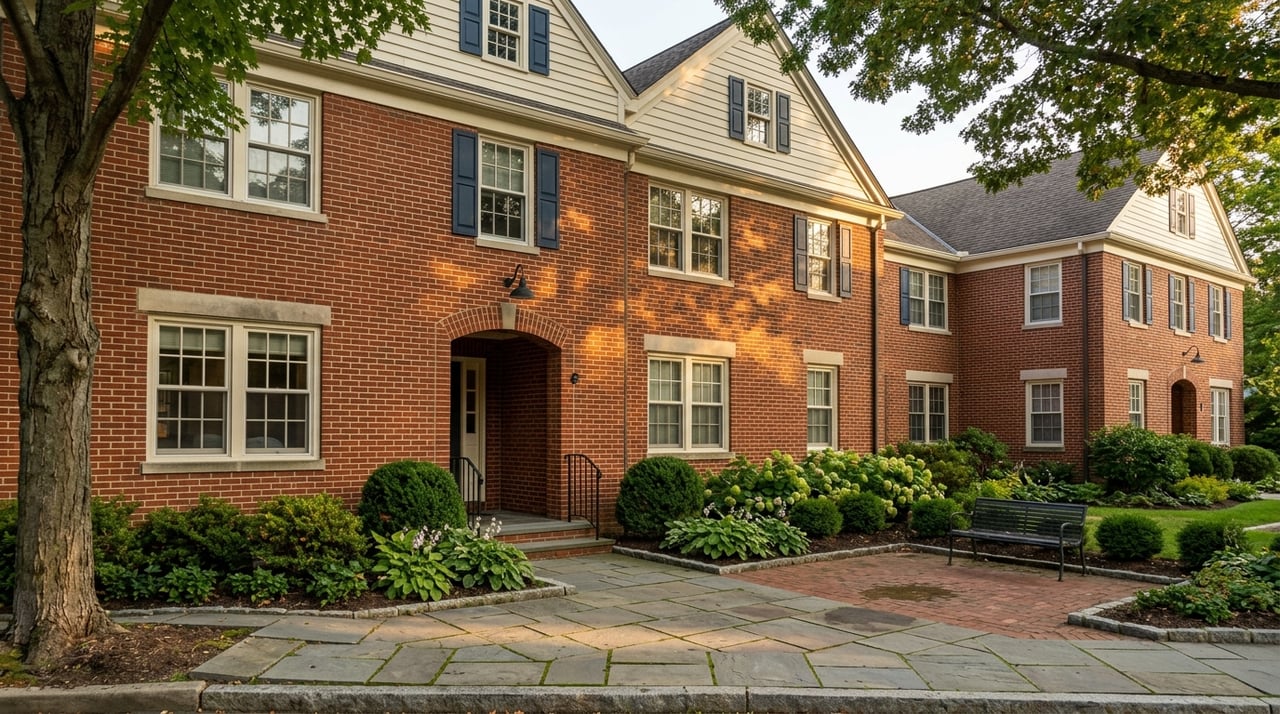
That is the question nobody hands you when you tour a two-bedroom at Wedge Pond or a unit at Waterfield Square. You see the brick townhouse charm, the walk to Winchester Center, the tight inventory that has kept these buildings competitive for years. What you don't see on a listing sheet is that Winchester already rezoned nearly 50 acres around its commuter rail station for multifamily housing, and that the pipeline is starting to move from town meeting warrant articles into actual foundations.
What the Town Actually Rezoned in 2024
Winchester's Town Meeting voted 129 to 31 on April 29, 2024 to approve a new MBTA 3A Overlay District, the zoning required under the state's MBTA Communities Act. The Attorney General's Office confirmed the bylaw on August 12, 2024, which meant the town's planning work was done and the new rules were live. Before this vote, multifamily construction in most of Winchester required a special permit, a public hearing, and often a fight. Inside the new overlay, it's allowed by right.
The rezoning covers both sides of North Main Street heading north from the rotary toward the Woburn line, land that had been zoned for business use since the 1960s. The town's Planning Board split the area into four subdistricts, each with its own density allowance:
- Central Business District, 17.6 acres, capacity for 844 units, the largest concentration in the overlay
- General Business District, 12.5 acres, capacity for 133 units
- North Wedge Pond, 9.7 acres, capacity for 36 units, named for the same pond that gives the existing Wedge Pond Condominium complex its view
- Parkview district, 8.7 acres, capacity for 235 units
Added together, town officials described the rezoning as opening the door to roughly 1,220 new housing units within a half mile of the Winchester Center commuter rail stop. That capacity exists today. Whether it gets built, and how fast, is a separate question.
From Paper to Actual Construction
Most MBTA Communities zoning across Massachusetts is still theoretical. A report from the think tank Boston Indicators, released January 28, 2026, found close to 7,000 units in the permitting pipeline statewide across 34 compliant communities as of that date, with most projects still working through permitting rather than pouring foundations. Winchester is one of the towns where at least a couple of specific projects have already moved past that stage.
Civico Development has proposed Waterfield Place, a mixed-income redevelopment on the parking lot at 25 Waterfield Road that sits directly against the Winchester Center MBTA station. Earlier versions of the plan described a four-story building on a one-acre lot with 60 residential units, 40 of them affordable. Separately, a Needham-based developer has won approval for a multifamily redevelopment at 416 Cambridge Street, another parcel inside the rezoned corridor.
Winchester's Town Planner, Taylor Herman, described the practical effect of the new zoning this way:
"What is allowed to be built today is what will be built in the MBTA 3A overlay."
The overlay didn't invent new building types out of nowhere. It removed the special permit requirement for residential-only projects, which is the difference between a developer needing a town hearing and a developer needing a building permit. That's the mechanism that turns zoned capacity into actual units, and it's already working on at least two Winchester parcels.
What's Actually On the Market Right Now
None of this has hit the existing condo inventory yet, and that's exactly the point worth understanding before you compare prices. Winchester's condo market has stayed tight through this transition. As of early June 2026, Winchester condo listings numbered roughly 32 active units, with an average of about 49 days on market and average pricing in the mid-$400s per square foot, against a median list price around $550,000. A broader pull of Winchester home sales in mid-July 2026, spanning all property types including condos, put the average days on market closer to 78 and blended pricing above $500 per square foot, a reminder that combined figures obscure what any single segment is actually doing.
That tightness applies to the established stock: buildings like Wedge Pond, Waterfield Square, Winchester Place, and Whitehorse Common, which have been part of Winchester's housing supply for decades and carry the kind of settled reserve funds, known assessment history, and mature landscaping that buyers moving from Cambridge or Somerville condos often specifically look for. These communities aren't competing with each other for buyers as much as they're competing with a shrinking pool of similar product across the entire I-93 North corridor.
Meanwhile, the top of Winchester's single-family market has cooled in a way that condos haven't. A regional housing report covering the 30 days ending June 5, 2026 grouped Winchester with Concord, Wellesley, Newton, and Weston as a band of trophy towns now sitting 70 to 90 days on market and closing between 97 and 99 percent of list, a meaningful shift from the multiple-offer, days-not-weeks pace those towns saw a year or two earlier. Condos haven't shown that same softening. If new supply lands anywhere first, it's more likely to land in the multifamily and condo segment near the train station than in the detached single-family stock that dominates the rest of town.
What This Means If You're Comparing Winchester Communities
None of this means an existing Winchester condo is a bad buy today. It means the scarcity that supports today's pricing has a shelf life that isn't visible in a listing sheet, and a buyer comparing communities right now can ask sharper questions than the ones the portals prompt:
- Is this building inside or outside the MBTA 3A Overlay boundary, and how close is it to North Main Street, Waterfield Road, or Cambridge Street?
- What does the condo association's reserve study say about capital needs over the next five to ten years, separate from anything happening outside the building?
- Has the town's Planning Board approved any project on an adjacent or nearby parcel that could change traffic, parking, or streetscape in this specific corridor?
- What's the realistic construction timeline for nearby approved projects, given that most Massachusetts MBTA Communities projects are still in permitting rather than under construction?
None of these questions should scare a buyer off an established Winchester condo. They should inform how a buyer thinks about the next several years, particularly if resale timing or long-term appreciation matters as much as the immediate purchase.
A Few Questions Worth Answering Directly
Will new construction near the train station lower prices at existing condo communities? There's no evidence of that yet, and the numbers above suggest current inventory is still tight. The relevant question is timing. Most of the roughly 1,220 units of zoned capacity haven't broken ground, and statewide data shows these projects typically take years to move from approval to occupancy.
Does the rezoning affect single-family homes the same way? Not directly. The 3A Overlay District applies to the North Main Street corridor and nearby parcels zoned for business use, not to the single-family neighborhoods that make up most of Winchester. The cooling seen in Winchester's higher-end single-family market appears to be a separate, broader regional trend rather than a byproduct of the zoning change.
How can I find out if a specific building sits inside the overlay? The town's Planning Board maintains project and zoning information on Winchester's official site, and it's worth checking before making assumptions based on a building's general neighborhood name.
If you're weighing a Winchester condo purchase, sale, or the long-term outlook for a unit you already own, it helps to talk with someone who tracks these communities and this corridor closely rather than relying on a portal median. Plunkett Properties has worked with buyers, sellers, and condo owners across Winchester's established communities for more than three decades, and we're glad to walk through what a specific building's position relative to the overlay district might mean for your plans. Contact us anytime.